
String instruments: plucked, bowed and strummed
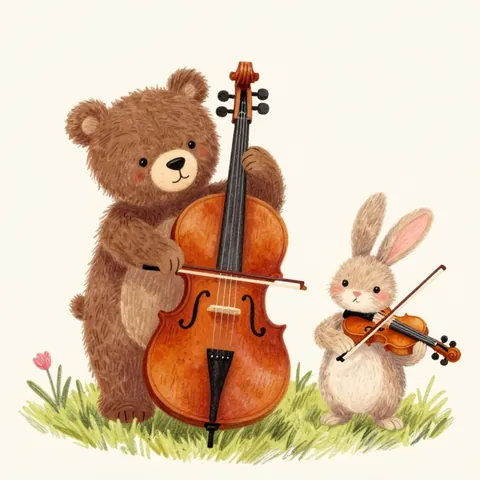
A string on its own makes only a tiny sound. String instruments add a hollow wooden body that makes the sound big enough to fill a room. Some are bowed, some are plucked, and some are strummed, but they all work in the same simple way.
In this lesson
How a string makes a note
When a string is pulled and let go, it shakes back and forth. Three things decide its note: how long it is, how tight it is and how thick it is. A short, tight, thin string sounds high. A long, loose, thick string sounds low.
Most string players change the note with their fingers. Pressing a string down on the neck makes the part that can shake shorter, so the note goes up. That is why a violin player slides their fingers up and down one string to play many notes.
The hollow body is a loudspeaker made of wood. The string shakes the bridge, the bridge shakes the body, and the air inside the body helps push the sound out into the room.
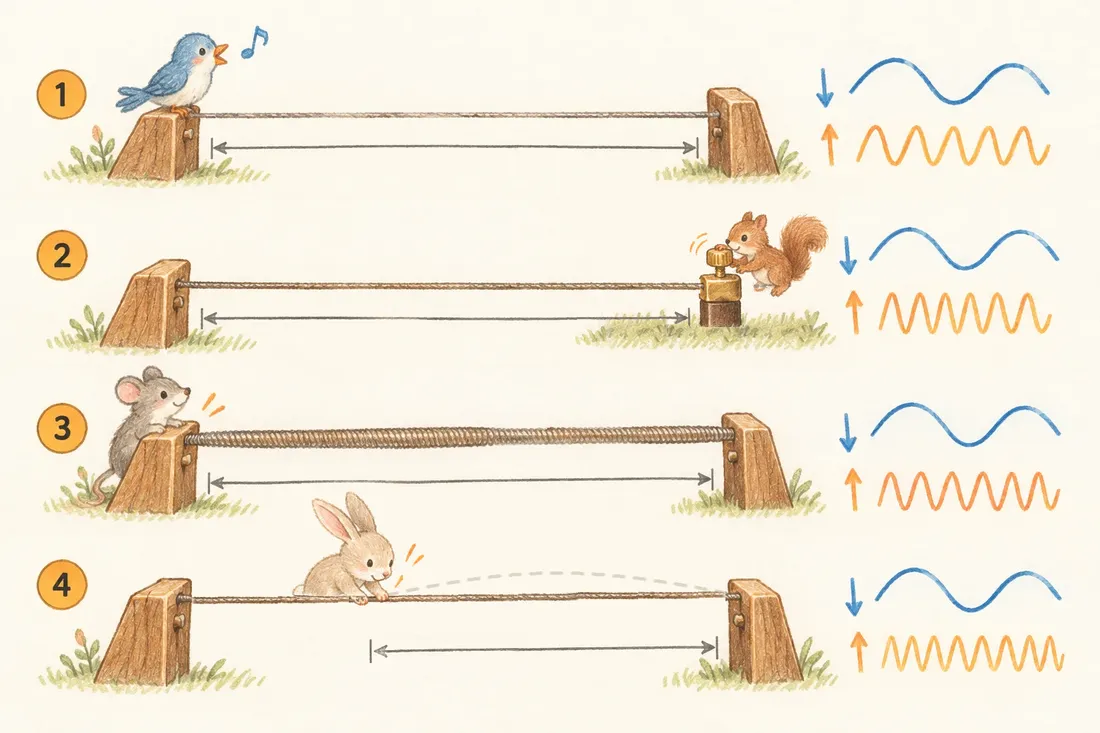
- A long string sounds lower, a short one higher
- A loose string sounds low, a tight one sounds high (turn the tuning peg to make it tighter)
- A thick string sounds lower, a thin one higher
- Pressing a finger on the string shortens the part that vibrates, so the note goes up
The violin family
The four bowed instruments of the orchestra are really one family in four sizes. A bow is a stick strung with horsehair. Drawing it across a string makes the string vibrate for as long as you keep bowing.
 Violin
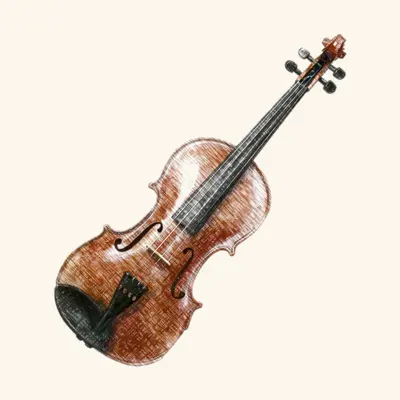
The smallest and highest. Four strings tuned G D A E, held under the chin.
How it is built: Thin spruce and maple wood are carved and glued into a hollow box. A bridge holds up the four strings, and a bow strung with horsehair makes them vibrate.
 Viola
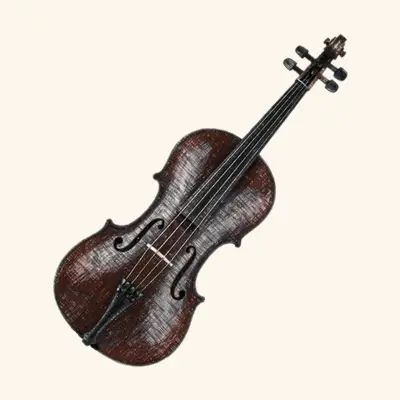
A little bigger than a violin, with a darker sound. Strings C G D A.
How it is built: It is built like a violin but a little bigger, with thicker strings. The sound comes out through two f-shaped holes in the hollow wooden body.
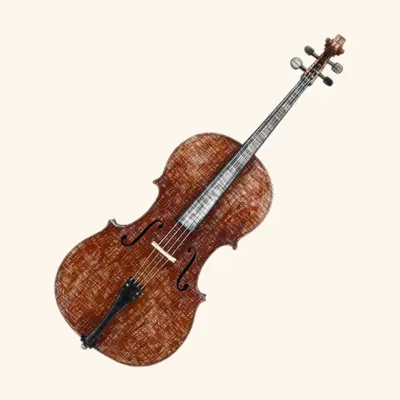 Cello
Played sitting down, resting on the floor. Strings C G D A, an octave lower than the viola.
How it is built: Spruce and maple make the big hollow body, and a spike called the endpin holds it up on the floor. The bridge passes the strings' shaking to the wooden top.
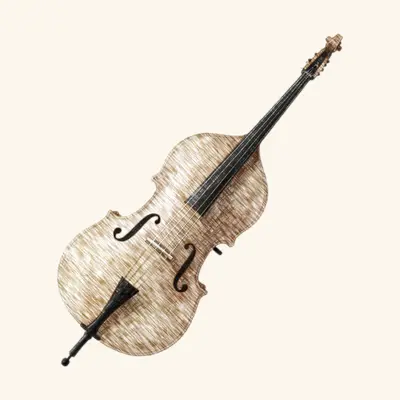 Double bass
The biggest and lowest, so tall that the player stands or sits on a stool. Strings E A D G.
How it is built: Its huge hollow wooden body often has sloping shoulders, and metal tuning gears tighten the strings. A spike called the endpin rests on the floor.
Each picture is either a picture-book drawing or a simple diagram, not a photo. Small details are simplified.
Plucked and strummed strings
Some string instruments are played with the fingers or a pick. A plucked note dies away on its own, which gives these instruments their quick, sparkling sound.
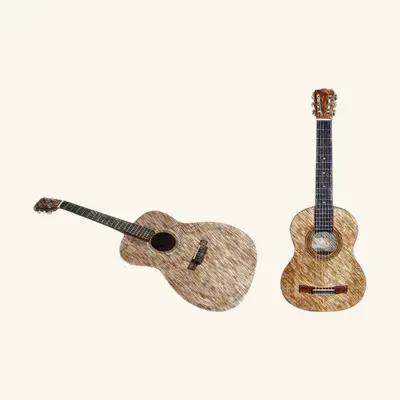 Acoustic and classical guitar
Six strings, tuned E A D G B E from the lowest. Metal frets on the neck mark where to press.
How it is built: The strings shake the thin wooden top through the bridge, and the hollow body with its round sound hole makes the sound louder. Classical guitars use soft nylon strings, folk guitars use steel.
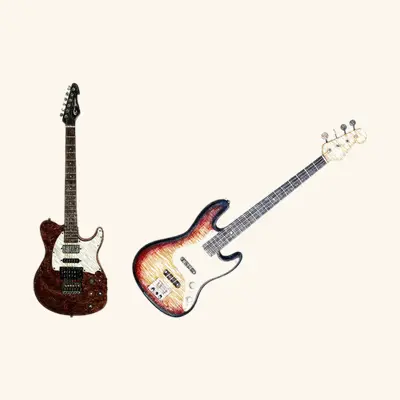 Electric guitar and bassElectric guitarBass guitar
A pickup turns the shaking of the strings into electricity, and an amplifier makes the sound louder. The bass has four thick strings tuned E A D G.
How it is built: Many electric guitars have a solid wooden body with no hollow space, so the sound comes mostly from the pickups. A bass is a longer guitar with thicker strings.
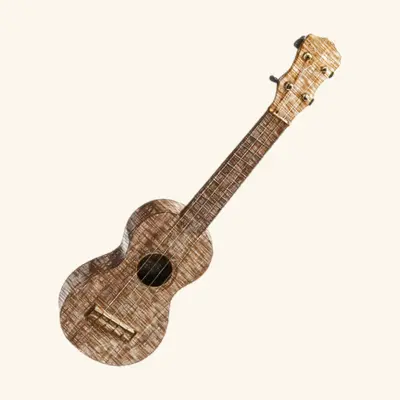 Ukulele
A small four-string instrument that became famous in Hawaii, usually tuned G C E A.
How it is built: Its small figure-eight body is often made of koa wood from Hawaii, with a round sound hole. The strings are usually soft nylon or a similar plastic.
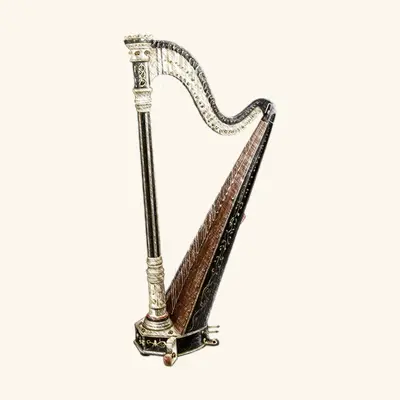 Harp
A big triangle of strings played with both hands. A concert harp usually has 47 strings and seven pedals that change the notes.
How it is built: Strings run from the wooden soundbox up to the curved neck, held up by a pillar. The C strings are usually red and the F strings black or blue, so players can find their place.
Each picture is either a picture-book drawing or a simple diagram, not a photo. Small details are simplified.
Plucking and bowing in the music
In music, "arco" means play with the bow, and "pizzicato" means pluck the string with a finger. A violinist can switch between them in the middle of a piece. You can find both words in the lesson on Italian music terms.
Piano sound: Salamander Grand Piano by Alexander Holm (CC BY 3.0).