
Percussion: hit it, shake it, scrape it
Percussion is one of the biggest and oldest families. If it makes a sound when you hit it, shake it or scrape it, it is probably percussion. Percussion keeps the beat for the whole band and adds sparkle, thunder and surprise.
In this lesson
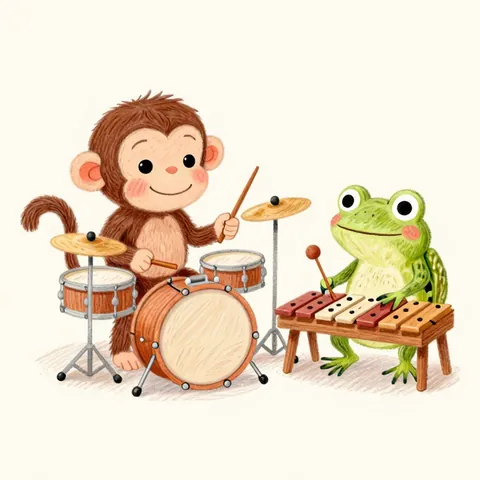
Hit, shake, scrape
A drum has a stretched skin (or a plastic sheet) over a hollow body. When you hit the skin, it shakes, and the air inside makes the sound bigger. A cymbal is a thin metal plate that rings when it is struck. A shaker is a hollow container full of little seeds or beads.
Percussion is also the family that keeps time. In a band, the drummer helps everyone stay together on the beat.
Tuned and untuned
Some percussion instruments play real notes, and some play only a sound without a clear note.
- Tuned percussion
- Xylophone, marimba, glockenspiel and timpani play notes you can sing along to.
- Untuned percussion
- Snare drum, bass drum, cymbals, triangle and tambourine make sounds without a clear note.
The drum kit
A drum kit is a whole percussion section for one player. The bass drum is played with a foot pedal and gives the deep thump. The snare drum gives the sharp crack. The hi-hat is two cymbals that open and close, and the toms are drums of different sizes. Together they make the beat of rock, pop and many other styles.
Drums around the world
Every culture has drums. The cajón is a wooden box that you sit on and slap, and it comes from Peru. Congas are tall hand drums used in Latin music. The djembe is a goblet-shaped drum from West Africa. Taiko are large Japanese drums that you can feel in your chest.
Piano sound: Salamander Grand Piano by Alexander Holm (CC BY 3.0).